Methionine
Methionine in Nervecept: How 8 mg Compares with the Protein on Your Plate
Methionine is one of the nine essential amino acids, the protein building blocks your body cannot make and must get from food. Nervecept lists 8 mg per capsule. One large egg supplies roughly 190 mg, so the capsule adds a food-sized sliver. No study has tested methionine at this amount for nerves, and the label does not say why it was included.
Written by the Nervecept label deskUpdated
The basics01
What is methionine?
Methionine is an amino acid that contains sulfur. It is essential, which means the body cannot build it from other parts, so it has to come from what you eat (MedlinePlus, Amino acids).
Every protein your cells make starts with methionine. It sits at the front of the chain when a new protein is assembled. It also feeds a chemical relay: the body turns methionine into SAMe, a compound that passes small carbon groups to DNA, hormones and brain chemicals. What is left over becomes homocysteine.
Homocysteine then has two exits. It can be recycled back into methionine, a step that needs folate and vitamin B12, or turned into cysteine, a step that needs vitamin B6. This matters for reading the Nervecept label, because the capsule contains methionine but none of those three B vitamins.
MedlinePlus notes that you do not need every amino acid at every meal. A balance across the day is enough (MedlinePlus, Amino acids).
Label line 602
How much methionine is in a Nervecept capsule?
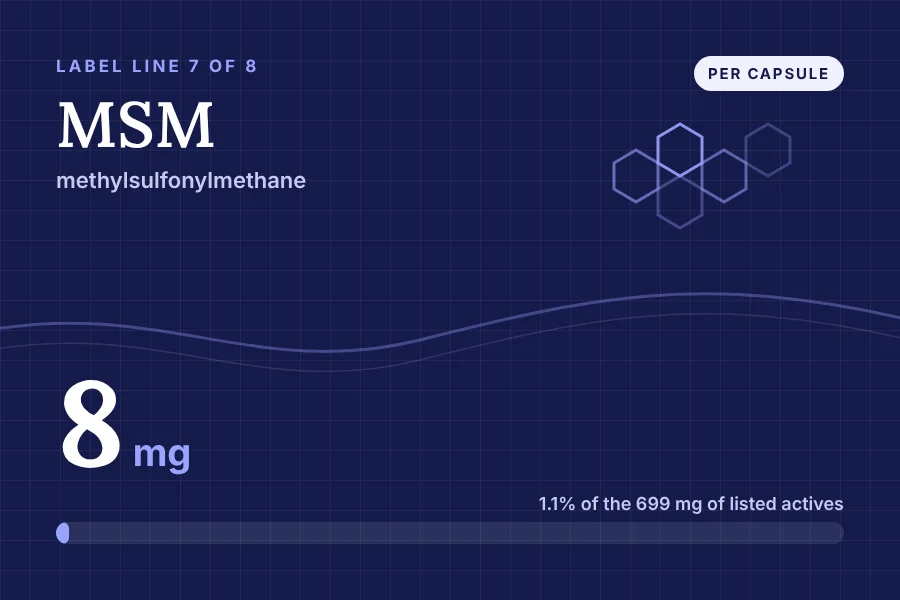
Each Nervecept capsule lists 8 mg of methionine, printed simply as "Methionine". It is line 6 of 8 on the Supplement Facts panel and about 1.1% of the 699 mg of actives.
The label does not name a form. Supplements usually use L-methionine, the form found in food protein, but the panel does not say so. There is no Daily Value for single amino acids, so the DV column is empty, as it is for every Nervecept line.
| Name on the label | Methionine |
|---|---|
| What it is | Essential amino acid found in protein foods |
| Place on the label | Line 6 of 8 on the Supplement Facts panel |
| Amount per capsule | 8 mg per capsule |
| Share of the 699 mg of actives | 1.1% |
| Amount used in research | Dietary need is about 1 g or more a day from protein food |
| Strength of evidence | No nerve trials found at this amount |
| Marketed or traditional use | Amino acid building block |
| Main caution | Food-like amount; large doses can raise homocysteine. |
Food comparison03
How much methionine do foods contain?
Protein foods contain far more methionine than one Nervecept capsule. A large egg has roughly 190 mg, a cup of milk about 200 mg and a 3 oz serving of cooked chicken breast roughly 700 mg.
The daily need is in the same range. World Health Organization estimates put adult needs for methionine plus cysteine at about 15 mg per kilogram of body weight. For a 150 lb adult, that works out to about 1,000 mg a day. Regular meals with protein foods cover it easily.
So the math is simple. The capsule's 8 mg is under 1% of a typical adult's daily need, and about one twenty-fourth of an egg.
| Food | Approximate methionine | Nervecept capsules to match |
|---|---|---|
| One Nervecept capsule | 8 mg (label) | 1 |
| One large egg | About 190 mg | About 24 |
| One cup of milk | About 200 mg | About 25 |
| 3 oz cooked chicken breast | About 700 mg | About 88 |
| Adult daily need, 150 lb (with cysteine) | About 1,000 mg | About 125 |
Plant foods carry less methionine per gram of protein than animal foods, but Brazil nuts, sesame seeds, oats and soy are useful sources. A varied vegan diet can still meet the need.
Research04
What does research say about methionine supplements?
Research on methionine is mostly about nutrition and metabolism, not supplements for symptoms. Scientists study how much people need, how the body handles it and what happens when intake is far too high or too low.
Too much is the better-known worry. Large single doses of methionine raise blood homocysteine for hours, and researchers use that effect as a lab test of how well the body clears it. High homocysteine has been linked with heart and blood vessel disease in observational studies. None of that applies to 8 mg, which is smaller than a mouthful of most protein foods.
- Trials of 8 mg methionine a day: none that we found.
- Trials of methionine for nerve symptoms in people: none that we found.
- A source that says methionine supplements support nerves: none. MedlinePlus makes no such claim (MedlinePlus, Amino acids).
Nerve evidence05
Does methionine support nerve health?
No study shows that adding methionine helps nerve symptoms in people, and the Nervecept label gives no reason for including it. Like every amino acid, it is part of the protein that nerve cells, and all other cells, are built from.
The nutrients with a real link to nerve health sit next door in the same pathway. Vitamin B12 deficiency can cause numbness and tingling in the hands and feet, sometimes before anemia appears, and metformin or long-term acid reducers can lower B12 (NIH ODS, Vitamin B12). Nervecept contains no B12.
If your feet tingle and you take metformin, a B12 blood test is a far more useful step than a few milligrams of an amino acid. The nerve vitamins guide covers B12, B6 and the rest.
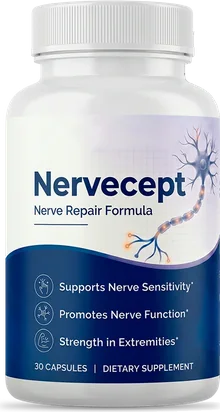
Nervecept: from $49 a bottle30 capsules · 2, 3 or 6 bottles · free US shipping on 3 or 6 · 60-day guarantee
See packsSafety06
Is 8 mg of methionine safe?
For most adults, 8 mg of methionine is a food-like amount with no known safety concern. The cautions that do exist apply to the whole Nervecept capsule, not this line.
The main one is the allergen. Nervecept's glucosamine comes from crayfish shells, and the label says "CONTAINS: Shellfish (Crayfish)." People with a shellfish allergy should not take it (FDA, Food Allergies). The other is blood thinners: several lines in the capsule carry bleeding or INR cautions (MSKCC, Glucosamine).
| Situation | Why | What to do |
|---|---|---|
| Homocystinuria or another inherited amino acid disorder | These are managed with a carefully counted methionine intake | Ask your metabolic clinic or dietitian first |
| Prescribed low-protein diet (for example, some kidney disease plans) | Every source of amino acids may be tracked | Show the label to your dietitian |
| Shellfish allergy | The capsule contains crayfish-derived glucosamine | Do not take Nervecept |
| Pregnant, nursing or under 18 | The label asks these groups to see a physician | Ask before starting |
Never stop or change a prescribed medicine, including metformin or a B12 shot, because you started a supplement. Bring the bottle to your next visit instead.
Label reading07
How do you read methionine on a supplement label?
Read methionine on a label by checking three things: the form, the milligrams and whether the B vitamins that process it are present. On Nervecept, the form is not stated, the amount is 8 mg and the B vitamins are absent.
Look for the form
L-methionine is the natural form. DL-methionine is a mix of two mirror forms and is common in animal feed. A label that names the form tells you more.
Compare the milligrams with food
Divide the label amount by about 190, the rough methionine in one egg. Nervecept's 8 mg gives about 0.04 of an egg.
Check the partner nutrients
Folate, B12 and B6 handle methionine's leftovers. A formula that lists methionine without them is not built around that pathway.
The whole capsule08
What role does methionine play in the Nervecept formula?
Methionine is a minor line in Nervecept, and the label does not explain its purpose. It may have been added because it is a sulfur amino acid, a theme it shares with glucosamine sulfate, chondroitin sulfate and MSM.
Whatever the reason, it is not a reason to buy or skip the capsule. Your breakfast likely supplies dozens of times more. Judge Nervecept by its larger lines and by whether its cautions fit you; the who it's for page and the full ingredient list are good next stops.
FAQ09
Nervecept questions people ask
Is methionine in Nervecept the same as the methionine in food?
Probably, but the label does not say. Food protein contains L-methionine, and most supplements use that form too. The Nervecept panel prints only "Methionine" and 8 mg, without naming the form or source.
Do vegans need extra methionine from a capsule like Nervecept?
Usually not. Plant proteins have less methionine per gram, but a varied vegan diet with grains, beans, soy, seeds and nuts can meet the need. The 8 mg in Nervecept would barely change a day's total.
Can methionine raise homocysteine?
Large doses can, and researchers use a big methionine dose as a lab test for that reason. At 8 mg, the amount in Nervecept is smaller than a bite of most protein foods, so a meaningful rise is unlikely.
Does Nervecept contain the B vitamins that work with methionine?
No. Folate, vitamin B12 and vitamin B6 help the body process methionine's byproduct, homocysteine, and none of them is on the Nervecept label. If you need B12, ask your doctor about a test.
How many eggs equal the methionine in one Nervecept capsule?
About one twenty-fourth of an egg. A large egg has roughly 190 mg of methionine, and the capsule lists 8 mg. Put the other way, one egg holds about as much as 24 capsules.
Is methionine a good supplement for tingling feet?
There is no evidence that it is. Tingling has many causes, including diabetes and low vitamin B12 (NIH ODS, Vitamin B12). A doctor can test for the cause, which is a better first step than any amino acid supplement.
Who wrote this10
Written and reviewed by
Pages built from the label, the sales page and linked NIH, FDA, CDC, FTC and peer-reviewed sources.
Last updated . Read our editorial standards and how we check reviews. This website is run by a Nervecept licensed U.S. outlet, not by the manufacturer or the distributor. We earn money when you buy through our order links.
Keep reading
More about Nervecept

Nervecept licensed U.S. outlet
Ready to try Nervecept?
Check the shellfish allergen and your medicines first, then pick a pack. Three or six bottles ship free in the US and cost less per bottle, with a 60-day money-back guarantee.
- Secure checkout on the sales page
- 60-day money-back guarantee
- Ships from the U.S.