Bromelain
Bromelain in Nervecept: 8 mg of Pineapple Stem Enzyme, Its Research and Its Cautions
Bromelain is a group of protein-digesting enzymes taken from the stem of the pineapple plant. Nervecept lists 8 mg per capsule. Arthritis trials used 540 to 1,890 mg a day, so one capsule supplies about 1.5% of the lowest of those doses. No study has tested bromelain for nerves. People allergic to pineapple, or taking blood thinners or tetracycline antibiotics, should ask first.
Written by the Nervecept label deskUpdated
The basics01
What is bromelain?
Bromelain is a mix of enzymes from the pineapple plant, Ananas comosus, that break proteins into smaller pieces. Enzymes that do this are called proteases. Memorial Sloan Kettering describes bromelain as an enzyme taken from pineapple stems (MSKCC, Bromelain).
The fruit has bromelain too. It is the reason fresh pineapple can make your mouth feel raw, and why fresh pineapple keeps gelatin desserts from setting. Canned pineapple behaves differently, because heat switches the enzyme off.
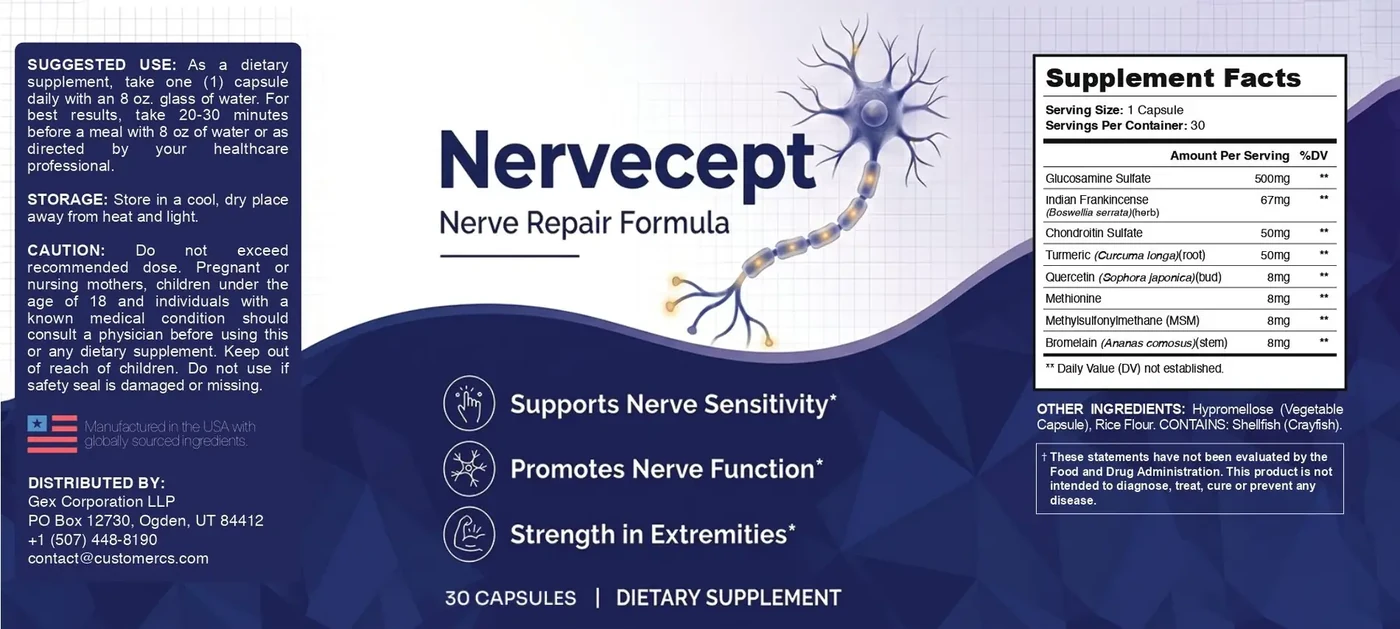
Stem and fruit bromelain are close cousins but not identical. Supplements usually use stem bromelain, since the tough stems are left over after the fruit is harvested. The Nervecept label names the stem as its source: "Bromelain (Ananas comosus)(stem)".
Label line 802
How much bromelain is in one Nervecept capsule?
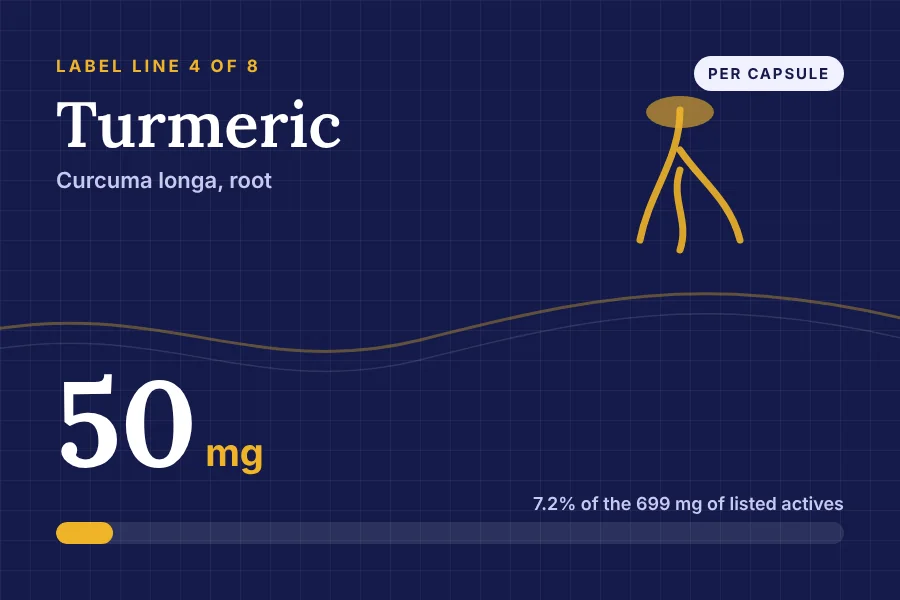
One Nervecept capsule lists 8 mg of bromelain, the last of its 8 label lines. That is about 1.1% of the 699 mg of listed actives.
There is one gap worth knowing. Enzyme strength is usually measured by activity, not weight. Many bromelain products state units such as GDU (gelatin digesting units) per gram, which shows how much work the enzyme can do. The Nervecept panel gives only milligrams, so the activity of its 8 mg is not stated.
| Name on the label | Bromelain (Ananas comosus)(stem) |
|---|---|
| What it is | Enzymes from pineapple stem |
| Place on the label | Line 8 of 8 on the Supplement Facts panel |
| Amount per capsule | 8 mg per capsule |
| Share of the 699 mg of actives | 1.1% |
| Amount used in research | 540-1,890 mg a day (osteoarthritis trials) |
| Strength of evidence | Mixed; small joint and swelling studies |
| Marketed or traditional use | Pineapple enzyme |
| Main caution | Pineapple allergy; may raise bleeding risk with blood thinners. |
Research03
What does research say about bromelain?
Research on oral bromelain is limited. NCCIH says it has been studied mainly for sinus problems, where there is not enough good research to recommend it, and for pain and swelling after wisdom tooth removal (NCCIH, Bromelain).
For joints, the results are mixed. A review of osteoarthritis studies called the findings promising but held back by small, short trials with little safety follow-up, and said a definitive placebo-controlled trial is still needed (Bromelain for OA, review of studies). MSK also rates arthritis results as mixed (MSKCC, Bromelain).
- Best-studied uses: sinus swelling, swelling after dental surgery, knee arthritis.
- Evidence quality: small and short trials; no firm recommendation.
- Nerve trials in people: none that we found.
Dose math04
Is 8 mg of bromelain close to studied doses?
No. The osteoarthritis trials used 540 to 1,890 mg of bromelain a day, and an open study in acute knee pain used 200 and 400 mg (Bromelain for OA, review of studies). Nervecept's 8 mg is about 1.5% of the lowest trial dose.
Matching even the smallest arthritis dose would take about 67 capsules. The label allows one a day, and that limit should stand.
Keep both sides of the math in view. No study at 8 mg exists, so nobody can say it does nothing. And no study at any dose has measured nerve function, so a larger amount would not settle the nerve question either.
| Daily amount | Study setting | Nervecept capsules to match |
|---|---|---|
| 8 mg | One Nervecept capsule (label) | 1 |
| 200 mg | Open study, acute knee pain (lower dose) (Bromelain for OA, review of studies) | 25 |
| 540 mg | Lowest osteoarthritis trial dose (Bromelain for OA, review of studies) | About 67 |
| 1,890 mg | Highest osteoarthritis trial dose (Bromelain for OA, review of studies) | About 236 |
| Any dose for nerves | Not published | No benchmark exists |
Nerve evidence05
Can bromelain help with nerve pain or numb feet?
No human study shows that bromelain helps nerve pain or numbness. Its research is about swelling and sore joints, and neither NCCIH nor MSK lists a nerve use (NCCIH, Bromelain) (MSKCC, Bromelain).
Swelling and nerve damage are not the same problem. A swollen ankle after a sprain can press on tissue for a while and then settle. Peripheral neuropathy is damage to the nerves themselves, most often from diabetes (NINDS, Peripheral Neuropathy). Easing swelling, even if bromelain did that at 8 mg, would not repair a damaged nerve.
For people with diabetes, the steps with real evidence are steady blood sugar, yearly foot exams and daily foot checks (CDC, Your Feet and Diabetes).

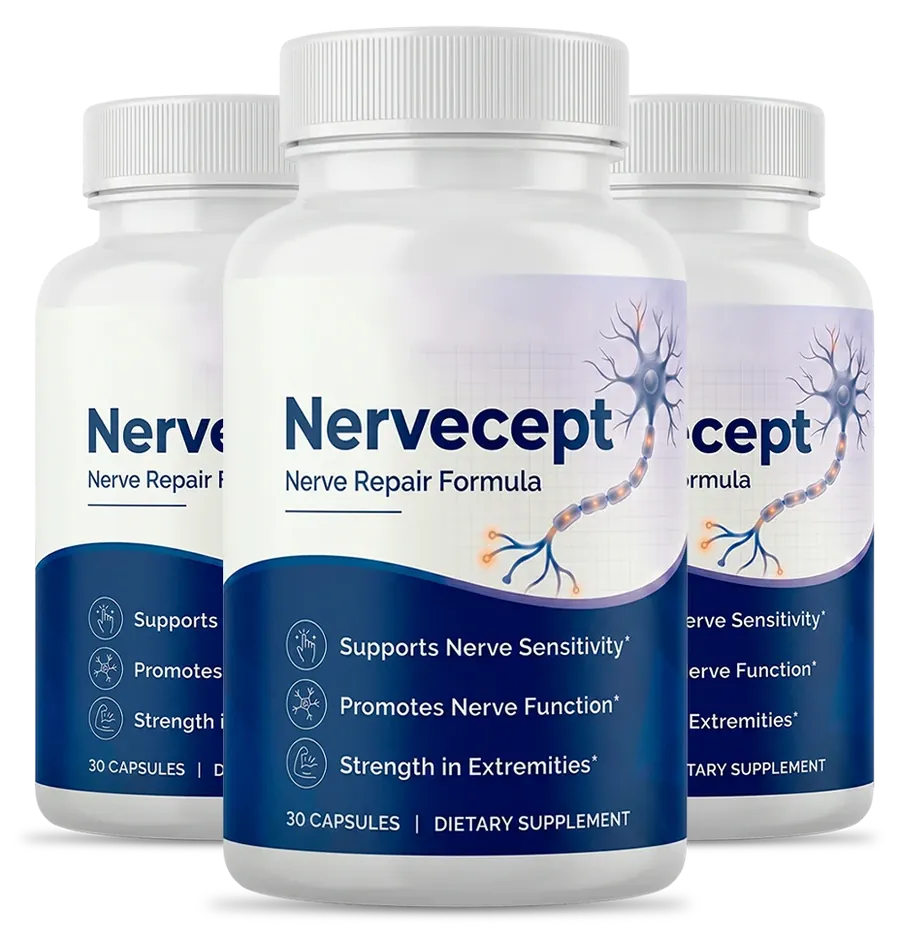
Nervecept: from $49 a bottle30 capsules · 2, 3 or 6 bottles · free US shipping on 3 or 6 · 60-day guarantee
See packsInteractions06
Can I take bromelain with blood thinners or antibiotics?
Not without asking first. MSK says not to take bromelain with warfarin or other blood thinners, because it may increase bruising and bleeding, or with tetracycline antibiotics, because it may raise their blood levels (MSKCC, Bromelain).
The bleeding caution is not unique to this line. In the same capsule, glucosamine with chondroitin may raise INR on warfarin (MSKCC, Glucosamine), and turmeric carries its own bleeding warning (MSKCC, Turmeric). Several small cautions in one capsule add up, so a pharmacist should see the whole label.
| Medicine group | Examples | Concern |
|---|---|---|
| Warfarin | Coumadin, Jantoven | More bruising and bleeding; ask the INR clinic |
| Other blood thinners | Apixaban, rivaroxaban, clopidogrel, daily aspirin | More bruising and bleeding |
| Tetracycline antibiotics | Tetracycline, doxycycline, minocycline | Higher antibiotic blood levels |
| Planned surgery or dental work | Any procedure | Tell the team about every supplement (NCCIH, Using Supplements Wisely) |
Never stop a blood thinner or an antibiotic course because of a supplement. If the two clash, pause the supplement and call your prescriber.
Allergy and side effects07
Who should avoid bromelain?
People allergic to pineapple should avoid bromelain, since allergic reactions have been reported (MSKCC, Bromelain). Anyone who has reacted to other plant enzymes, such as papain from papaya, should ask an allergist first.
The usual side effects at trial doses are stomach upset and diarrhea (NCCIH, Bromelain). Little is known about bromelain in pregnancy, so NCCIH advises talking with a provider, and the Nervecept label asks pregnant or nursing women and anyone under 18 to see a physician first.
One more allergy point covers the whole capsule. Nervecept's glucosamine is made from crayfish shells, and the label says "CONTAINS: Shellfish (Crayfish)." A shellfish allergy is a reason to skip it entirely (FDA, Food Allergies). See all cautions on the side effects page.
The whole capsule08
What does bromelain add to the Nervecept formula?
Bromelain is the smallest of four plant extracts in Nervecept, alongside boswellia, turmeric and quercetin. The label does not say why it is there; the likely reason is its reputation for easing swelling.
At 8 mg with no activity units printed, it is hard to credit bromelain with any specific role in the capsule. Its cautions, on the other hand, apply at any dose, so they belong on your checklist. For a broader look at mixing supplements with prescriptions, read the supplements and nerve medicines guide, and compare all eight lines on the ingredients page.
FAQ09
Nervecept questions people ask
Is the bromelain in Nervecept from pineapple fruit or stem?
The stem. The label reads "Bromelain (Ananas comosus)(stem)". Stem bromelain is the usual supplement form, made from the tough central stems left after the fruit is harvested.
How many Nervecept capsules equal a 540 mg bromelain dose?
About 67. Each capsule lists 8 mg, and 540 divided by 8 is 67.5. The label allows one capsule a day, so Nervecept cannot reach the doses used in arthritis trials (Bromelain for OA, review of studies).
Can I take Nervecept while on doxycycline?
Ask your prescriber or pharmacist first. MSK says bromelain may raise blood levels of tetracycline antibiotics, a group that includes doxycycline and minocycline (MSKCC, Bromelain). Finish the antibiotic course as prescribed either way.
Why does the Nervecept label list bromelain in mg instead of GDU?
The label does not explain. Enzyme strength is usually stated as activity units, such as GDU per gram, because two batches of the same weight can do different amounts of work. Without units, the 8 mg tells you weight, not strength.
Does eating fresh pineapple give the same bromelain as Nervecept?
Not exactly. Fresh pineapple fruit contains bromelain, but fruit and stem bromelain differ, and food amounts are not standardized. Canned or cooked pineapple has little active enzyme, because heat destroys it.
Should I stop Nervecept before dental surgery because of bromelain?
Ask your dentist or surgeon. Bromelain may add to bruising and bleeding, and NCCIH advises telling every provider about supplements before procedures (NCCIH, Using Supplements Wisely). Follow the team's instructions on when to stop and restart.
Who wrote this10
Written and reviewed by
Pages built from the label, the sales page and linked NIH, FDA, CDC, FTC and peer-reviewed sources.
Last updated . Read our editorial standards and how we check reviews. This website is run by a Nervecept licensed U.S. outlet, not by the manufacturer or the distributor. We earn money when you buy through our order links.
Keep reading
More about Nervecept

Nervecept licensed U.S. outlet
Ready to try Nervecept?
Check the shellfish allergen and your medicines first, then pick a pack. Three or six bottles ship free in the US and cost less per bottle, with a 60-day money-back guarantee.
- Secure checkout on the sales page
- 60-day money-back guarantee
- Ships from the U.S.