Glucosamine sulfate
Glucosamine Sulfate in Nervecept: The 500 mg Line, Studied Doses and Cautions
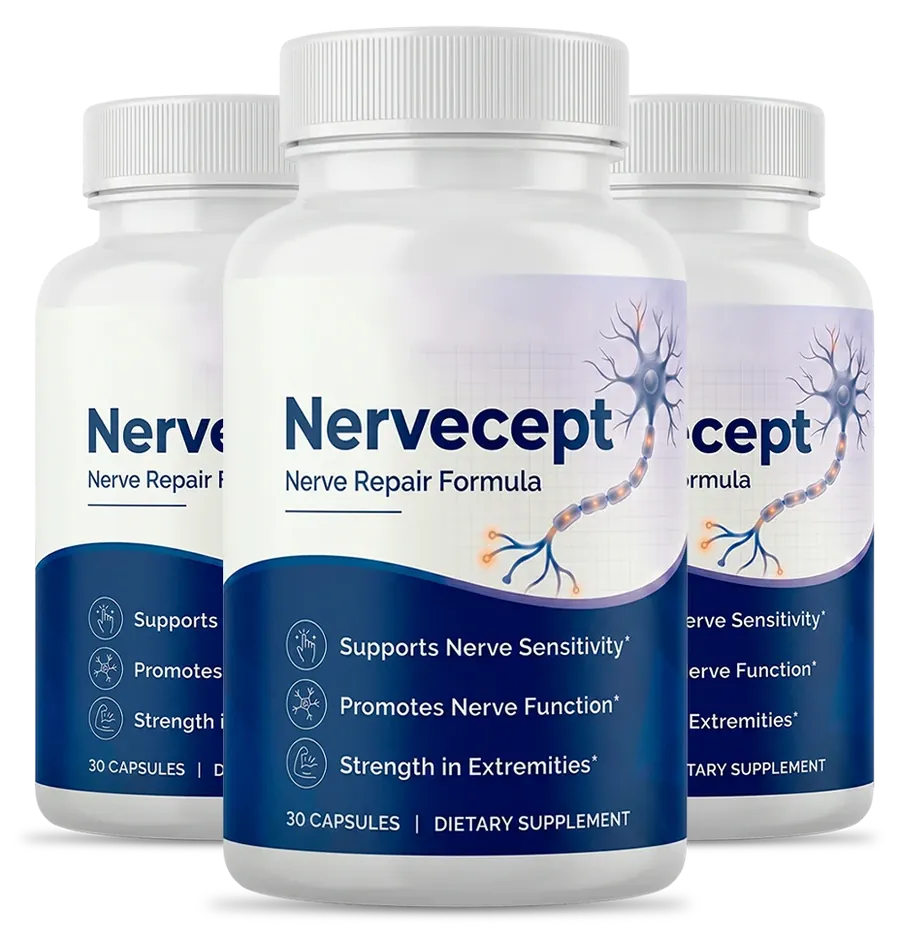
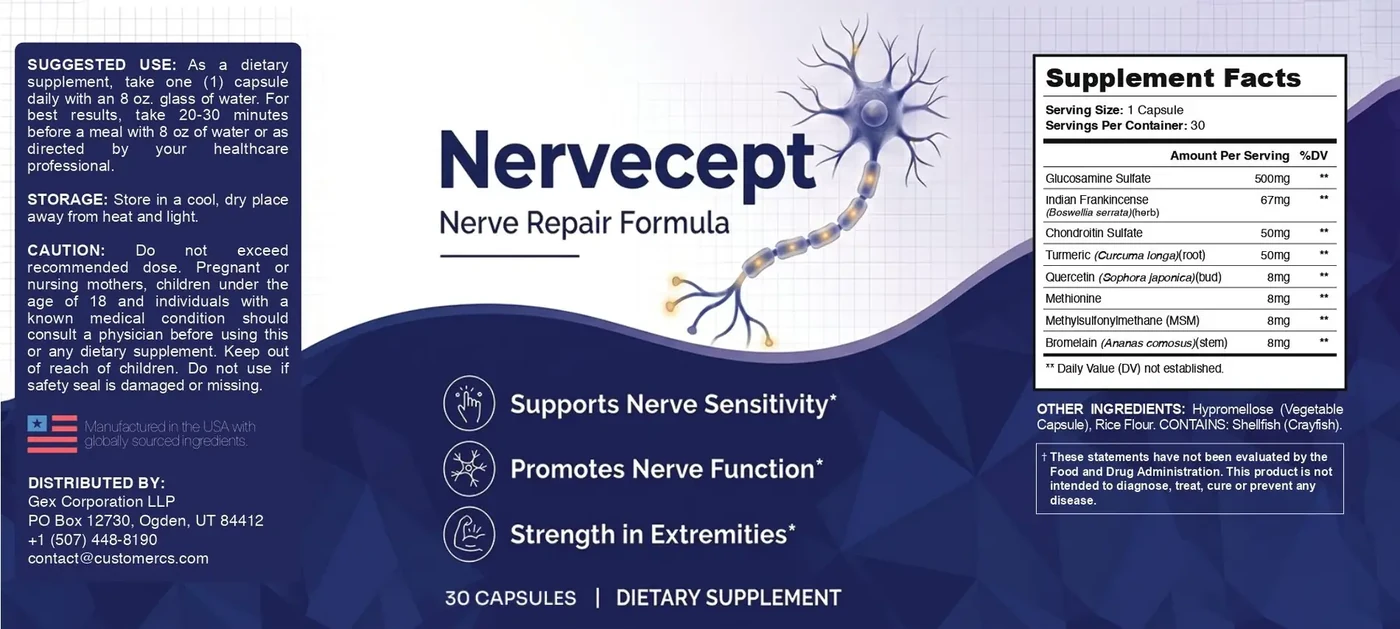
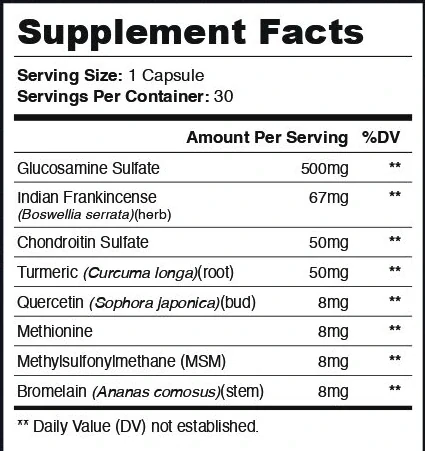
Glucosamine sulfate in Nervecept is the first and largest line on the label: 500 mg per capsule, about 71.5% of the 699 mg of actives. It is an amino sugar made from crayfish shells, so it carries a shellfish warning. Research on it is about knee and hip joints, with mixed results. No study has tested it for nerves.
Written by the Nervecept label deskUpdated
The basics01
What is glucosamine sulfate?
Glucosamine sulfate is an amino sugar, a small building block the body uses to make cartilage and joint fluid. Supplement makers usually get it from shrimp, crab or, in Nervecept's case, crayfish shells.
Your body makes its own glucosamine from glucose. The supplement form is sold mainly for stiff knees and hips. The "sulfate" part is a salt that keeps it stable.
The label reads "CONTAINS: Shellfish (Crayfish)." That line exists because of the glucosamine. Crustacean shellfish is one of the nine major allergens FDA requires labels to name (FDA, Food Allergies).
On the label02
How much glucosamine sulfate is in one Nervecept capsule?
One Nervecept capsule holds 500 mg of glucosamine sulfate. That is 500 of the 699 mg of listed actives, or 71.5% of everything active in the capsule.
Glucosamine outweighs the other seven lines combined by about two and a half to one. One bottle of 30 capsules adds up to 15 grams of it.
| Name on the label | Glucosamine Sulfate |
|---|---|
| What it is | Amino sugar; this one is made from crayfish shells |
| Place on the label | Line 1 of 8 on the Supplement Facts panel |
| Amount per capsule | 500 mg per capsule |
| Share of the 699 mg of actives | 71.5% |
| Amount used in research | 1,500 mg a day (GAIT trial; usual package dose) |
| Strength of evidence | Mixed for joint pain; no nerve trials found |
| Marketed or traditional use | Sold for joints and cartilage |
| Main caution | Shellfish source; may raise INR on warfarin; check blood sugar if you have diabetes. |
Research03
Does glucosamine sulfate help joint pain?
The answer is uncertain. Large, careful trials of glucosamine for knee arthritis found little or no difference from placebo, and major arthritis guidelines now recommend against it (NCCIH, Glucosamine and Chondroitin) (NCCIH, Chronic Pain and Complementary).
A Cochrane review of 25 trials found benefit mainly in studies of one branded product. The better-run trials showed no clear gain (Cochrane, Glucosamine for OA (2005)).
| Study | Who and how much | Result |
|---|---|---|
| GAIT trial (Clegg et al., NEJM 2006 (GAIT)) | 1,583 adults with knee arthritis; 1,500 mg a day for 24 weeks | Not significantly better than placebo; celecoxib was |
| Cochrane review (Cochrane, Glucosamine for OA (2005)) | 25 trials, 4,963 patients | Benefit only with one branded product; safety close to placebo |
| NIH two-year trial (NCCIH, Glucosamine and Chondroitin) | 572 people with knee arthritis | No difference in joint space width |
Dose check04
Is 500 mg of glucosamine enough compared with studies?
No, 500 mg is one third of the usual studied amount. GAIT used 1,500 mg a day, and most packages suggest 1,500 mg, often as 500 mg three times (Clegg et al., NEJM 2006 (GAIT)) (Cochrane, Glucosamine for OA (2005)).
Taking three capsules is not the fix: the label says one a day and warns not to exceed it. A smaller dose does not prove nothing happens, and 1,500 mg would still not show a nerve benefit, since the trials measured joints.
Nervecept: from $49 a bottle30 capsules · 2, 3 or 6 bottles · free US shipping on 3 or 6 · 60-day guarantee
See packsNerve evidence05
Does glucosamine help nerve pain or neuropathy?
There is no good evidence that it does. We found no human trial of glucosamine for peripheral neuropathy, tingling feet or nerve pain.
The neurology guideline for painful diabetic neuropathy names prescription medicine classes plus exercise and tai chi, not joint supplements (AAN, Painful Diabetic Neuropathy 2022). Joint pain and nerve pain have different causes; our peripheral neuropathy guide explains how.

Safety06
Is glucosamine sulfate safe with warfarin or diabetes?
Ask your doctor first in both cases. Glucosamine with chondroitin may make warfarin stronger and raise INR, and glucosamine may raise blood glucose in some people (NCCIH, Glucosamine and Chondroitin) (MSKCC, Glucosamine).
Nervecept holds both glucosamine and chondroitin, so the warfarin point applies directly. If you have diabetes, check readings as usual and share them. Keep taking prescribed medicine, and never change a dose because of a supplement.
Blood thinners
INR may rise. An extra check may be wise.
More on the side effects page and the shellfish allergen page.
In the formula07
How does glucosamine sulfate fit in the Nervecept formula?
Glucosamine is the backbone of Nervecept by weight. It makes the capsule a joint-style formula with seven smaller helpers, sold as a "Nerve Repair Formula".
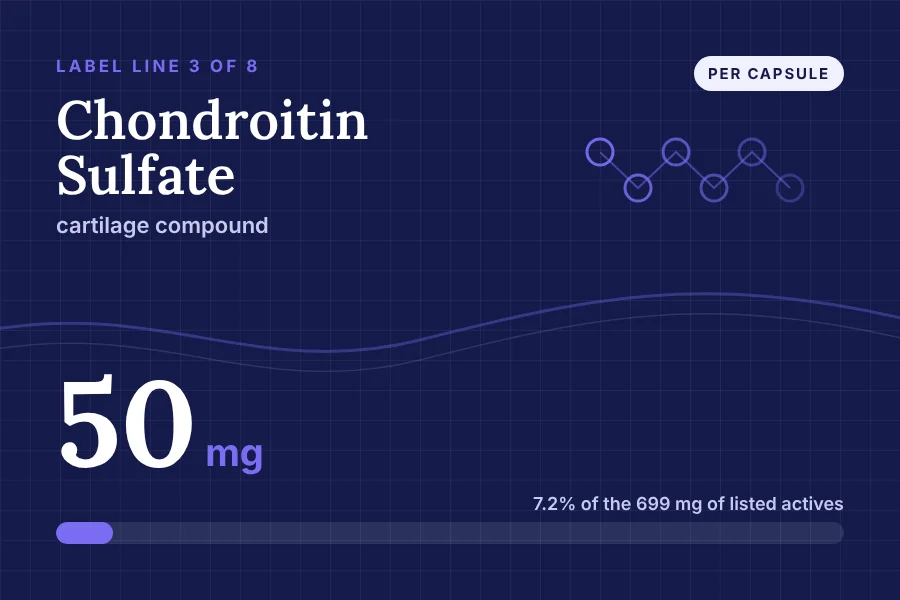
It pairs with 50 mg of chondroitin sulfate, its classic partner. Compare all eight lines on the ingredients page.
FAQ08
Nervecept questions people ask
Is the glucosamine in Nervecept made from shellfish?
Yes. The label says CONTAINS: Shellfish (Crayfish), and that warning comes from the glucosamine sulfate, which is made from crustacean shells. Anyone with a shellfish allergy should not take the capsule.
Is 500 mg of glucosamine sulfate a normal dose?
It is one third of the usual amount. Package directions and the GAIT trial use 1,500 mg a day, often as three 500 mg doses. Nervecept's label says one capsule daily.
Did the GAIT trial show glucosamine works?
Not overall. GAIT gave 1,583 people with knee arthritis 1,500 mg a day for 24 weeks, and it was not significantly better than placebo. Celecoxib, tested alongside, was.
Can glucosamine sulfate raise my blood sugar?
It may in some people. NCCIH says glucosamine may raise blood glucose, and MSKCC says it may worsen insulin resistance. People with diabetes should track readings and tell their care team.
Does glucosamine sulfate interact with warfarin?
It can. Glucosamine with chondroitin may strengthen warfarin and raise INR, which raises bleeding risk. Nervecept contains both, so talk to the prescriber before starting.
Has glucosamine been tested for neuropathy?
We found no human trial of glucosamine for peripheral neuropathy or nerve pain. The research is about knee and hip cartilage, and neuropathy guidelines do not list joint supplements.
Who wrote this09
Written and reviewed by
Pages built from the label, the sales page and linked NIH, FDA, CDC, FTC and peer-reviewed sources.
Last updated . Read our editorial standards and how we check reviews. This website is run by a Nervecept licensed U.S. outlet, not by the manufacturer or the distributor. We earn money when you buy through our order links.
Keep reading
More about Nervecept
Nervecept licensed U.S. outlet
Ready to try Nervecept?
Check the shellfish allergen and your medicines first, then pick a pack. Three or six bottles ship free in the US and cost less per bottle, with a 60-day money-back guarantee.
- Secure checkout on the sales page
- 60-day money-back guarantee
- Ships from the U.S.